10 vs 20 vs 30 Yard Dumpster: Which Size Is Right for Your Project?
A 10 yard dumpster handles small cleanouts and single-room projects. A 20 yard dumpster covers most home renovations and stays the most requested size in Ocean County. A 30 yard dumpster suits full gut renovations and new construction debris. 12 and 15 yard dumpsters bridge the gap for mid-size jobs like kitchen updates or garage cleanouts. Matching weight and volume to the container, not job size alone, determines the right fit.
Renting the wrong dumpster size ranks among the most common and costly mistakes homeowners make during a cleanout, renovation, or construction project. A container that is too small means a second haul, extra fees, and lost time. One that is too large means paying for space that never gets used. The 10 vs 20 vs 30 yard dumpster comparison comes down to matching debris volume, material weight, and driveway space to the right container.
Ocean County homeowners and contractors face this decision constantly, whether clearing out an attic, gutting a kitchen, or hauling debris from new construction. Alco Disposal offers 10, 12, 15, 20, and 30 yard dumpsters across Toms River and the surrounding area, giving projects of nearly any scale a fitting option. The sections below break down dimensions, capacity, and best-fit projects for each size, along with a quick decision guide for borderline cases.
How Dumpster Sizes Are Measured
Dumpster capacity is measured in cubic yards, a unit of volume rather than weight. One cubic yard equals a cube measuring three feet on every side. Understanding cubic yards is the first step in the 10 vs 20 vs 30 yard dumpster decision, since a 10 yard dumpster holds roughly 10 cubic yards of debris while a 30 yard dumpster holds nearly three times that volume.
A useful comparison point is pickup truck loads. A standard pickup bed holds close to 2 to 3 cubic yards when loaded level. That means a 10 yard container equals about 4 pickup loads, a 20 yard container equals about 8 loads, and a 30 yard container equals 12 to 14 loads.
Project scope is the starting point for narrowing down a size, but square footage alone does not tell the whole story. A small room gutted down to the studs can generate more debris than a larger room where only flooring gets replaced, so the actual materials coming out of a space matter as much as the size of the space itself.
Material type also affects how quickly a container fills relative to its yardage. Bulky items like furniture, cabinetry, and mattresses take up volume without adding much weight, so they can fill a dumpster before the weight limit is reached. Dense materials do the opposite, reaching the weight cap while leaving visible space in the container. Keeping both measurements in mind before loading helps avoid unexpected overage charges on the final invoice.
Alco Disposal offers five container sizes across Ocean County: 10, 12, 15, 20, and 30 yard dumpsters, covering everything from a single-room cleanout to a full home renovation. Full details on every option are available on the Alco Disposal dumpster sizes page.
The 10 Yard Dumpster: Best for Small Projects
Dimensions and capacity
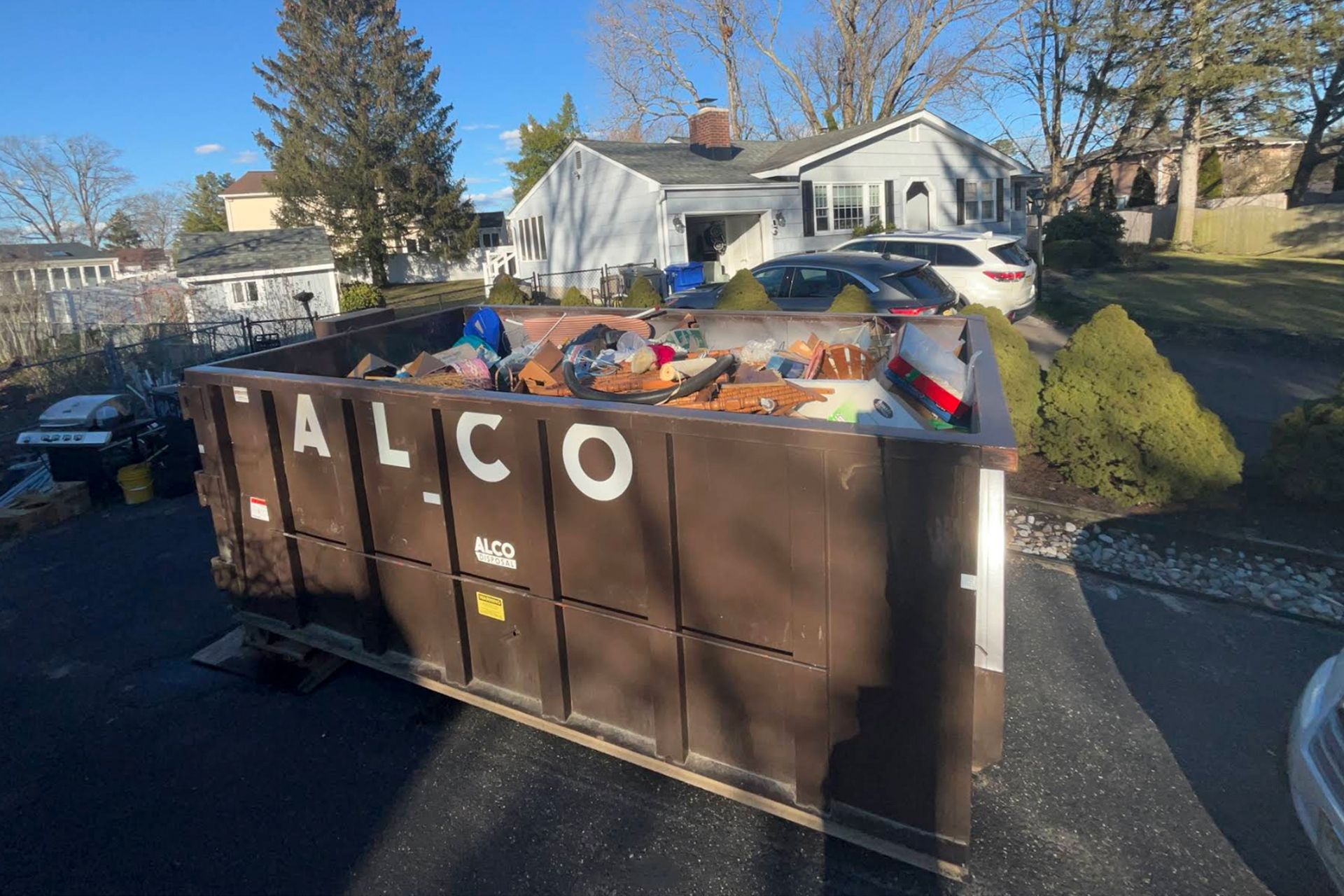
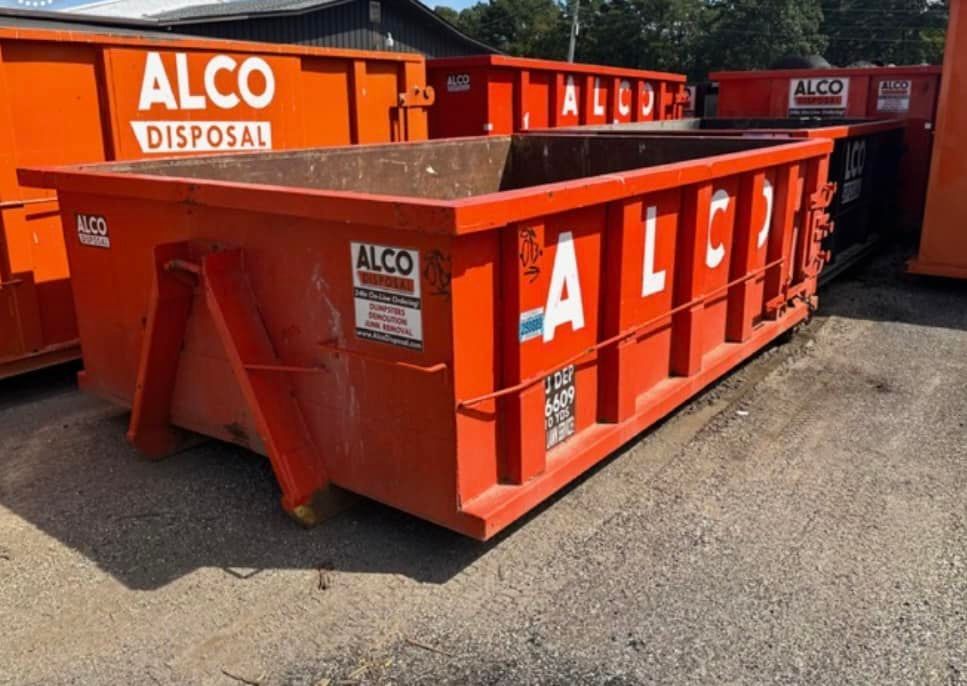
A 10 yard dumpster measures approximately 12 feet long, 8 feet wide, and 3.5 feet tall. That footprint fits into most residential driveways without blocking a garage or sidewalk. Capacity runs close to 4 pickup truck loads, or roughly 2,000 to 3,000 pounds depending on material density.
When to choose a 10 yard dumpster
This size fits attic cleanouts, single-room renovations, small roofing jobs, and seasonal yard debris removal. A homeowner clearing out a garage or finishing a small bathroom remodel typically generates enough debris to fill a 10 yard container without going over the weight limit.
Cost tends to run lower for a 10 yard dumpster than any other size Alco Disposal offers, since rental rates typically scale with container size and included weight allowance. For a homeowner working through a single-room project, this size usually offers the best balance between price and available space.
Anyone renting for a compact project can review current availability through dumpster rental in Toms River, NJ before booking.
The 12 and 15 Yard Dumpster: The Middle Ground
Who benefits most from a 12 or 15 yard dumpster
Projects that outgrow a 10 yard container but do not need the full capacity of a 20 yard dumpster often land in the 12 or 15 yard range. Roof shingle removal, kitchen updates, and garage cleanouts with more volume than a single small room typically fall here.
These mid-size containers also work well for tight driveways where a 20 yard dumpster would not fit comfortably. Ocean County properties with shorter driveways or shared access often default to a 12 or 15 yard size for that reason, making them a practical answer to the common question of what size dumpster do I need for a mid-scope project.
Rental duration for a 12 or 15 yard dumpster typically runs 5 to 10 days, which suits the pace of a kitchen update or a multi-day garage cleanout. Scheduling a container for the length of the project, rather than guessing at a shorter window, helps avoid extension fees if the job runs long.
The 20 Yard Dumpster: The Most Popular Choice
Dimensions and capacity
A 20 yard dumpster measures approximately 22 feet long, 8 feet wide, and 4.5 feet tall. Capacity reaches about 8 pickup truck loads, making it the most versatile size Alco Disposal rents.
Best projects for a 20 yard dumpster in Ocean County
Multi-room renovations, deck removals, large basement cleanouts, and siding replacement projects generate enough debris to justify a 20 yard container. This size balances volume against driveway space better than any other option, which explains why 20 yard dumpster rental in Toms River stays in consistent demand throughout the year.
Homeowners unsure whether a project needs a 20 yard dumpster over a smaller size can call (732) 349-5658 to confirm sizing before the container arrives. A quick conversation before delivery avoids the cost of a mid-project upgrade.
Contractors working across multiple towns can also check availability through dumpster rental in Brick, NJ for nearby jobs.
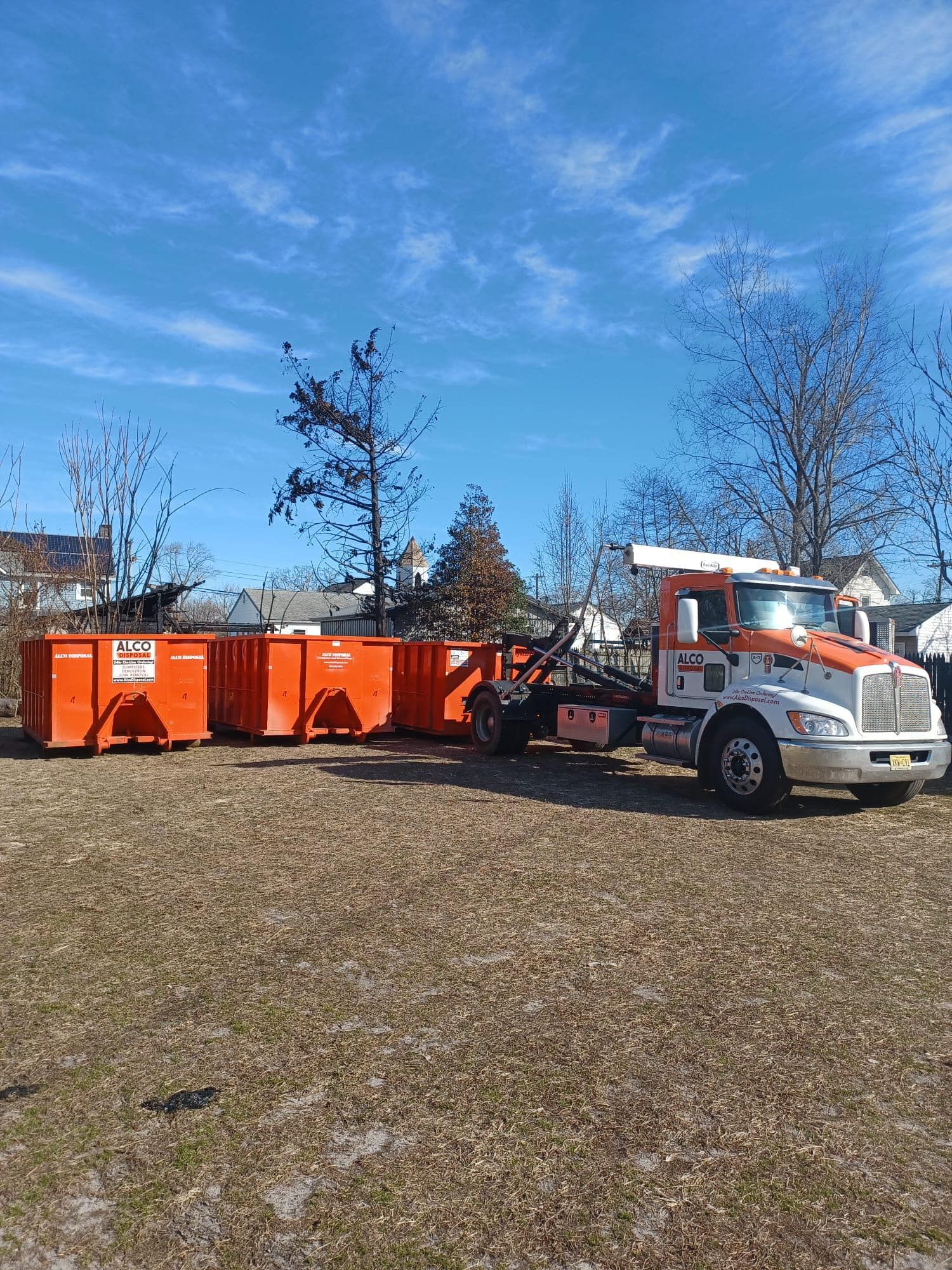
Placement planning matters for a 20 yard dumpster given its length. Confirming a flat, accessible spot in the driveway before delivery, ideally with a few extra feet of clearance on either side, makes both drop-off and pickup easier for the delivery truck.
The 30 Yard Dumpster: Built for Big Jobs
Dimensions and capacity
A 30 yard dumpster measures approximately 22 feet long, 8 feet wide, and 6 feet tall. Capacity runs 12 to 14 pickup truck loads, the largest option Alco Disposal offers. The added height and length mean this size needs more clearance for delivery and placement than any other container.
When does a project actually need a 30 yard dumpster?
Full gut renovations, new construction debris, and large commercial cleanouts generate volume that smaller containers cannot handle in a single haul. A property undergoing a complete interior demolition, for example, produces flooring, drywall, framing, and fixtures well beyond what a 20 yard dumpster holds.
Driveway and street clearance should be confirmed before booking a 30 yard container, since the extra length can require more setback than shorter driveways allow.
Some municipalities require a permit for placing a large roll-off container on a street rather than a private driveway. Confirming placement location and any permit requirements before the delivery date prevents delays once the container arrives on site.
How to Choose Between Sizes: A Quick Decision Guide
Job type is not the only variable worth weighing. Available driveway space, expected debris density, and how long the project will run all factor into the right choice. The following breakdown covers the most common scenarios Ocean County homeowners and contractors encounter.
The 10 vs 20 vs 30 yard dumpster decision often comes down to a simple framework:
● Single room, attic, or small yard cleanup: a 10 yard dumpster is usually enough.
● Roof, kitchen, or garage job with moderate debris: a 12 or 15 yard dumpster fits better.
● Multiple rooms, a deck, or siding removal: a 20 yard dumpster covers the volume.
● Full renovation or new construction: a 30 yard dumpster handles the load.
When volume is still unclear, calling Alco Disposal directly for a recommendation prevents both overpaying for unused space and running out of room mid-project.
Renting one size larger than strictly necessary sometimes costs less overall than filling a smaller container and paying for a second pickup. Weighing the price difference between adjacent sizes against the likelihood of running out of room is worth a quick call before committing to either option.
Seasonal timing plays a role too. Spring cleanouts and fall yard debris projects tend to run smaller in scope than winter renovation work, when homeowners often tackle indoor projects like kitchens or basements. Booking ahead during peak renovation season in Ocean County helps secure the preferred size and delivery window.
Dumpster Size vs Weight Limits: What You Need to Know
Cubic yards measure volume, not weight, and the two do not always scale together. A 30 yard dumpster filled with lightweight debris like drywall and insulation may weigh far less than a 10 yard dumpster packed with concrete, dirt, or roofing shingles.
Dense materials such as concrete, brick, and soil hit weight limits long before they fill the container's volume. A smaller dumpster often works better for these materials, since overage fees apply once a load exceeds its assigned weight allowance regardless of size.
Roofing shingles, for example, weigh far more per cubic yard than household junk or construction scrap wood. A 10 yard dumpster filled with shingles can reach its weight limit well before the container looks full, while the same size filled with cardboard, furniture, or yard waste may never come close to the weight cap. Knowing the general material being disposed of ahead of time helps determine whether volume or weight will be the limiting factor.
The EPA's waste reduction guide outlines how diverting recyclable materials, such as concrete and clean wood, from landfill disposal can reduce both weight and disposal cost. New Jersey's solid waste program through the state Department of Environmental Protection also outlines requirements for construction and demolition debris disposal that apply to Ocean County projects.
Sorting debris before loading, when time allows, can also help keep a project within its assigned weight limit. Separating heavier materials like concrete or shingles into their own load, rather than mixing them with lighter debris, makes it easier to gauge whether a size upgrade is worth considering before the container fills.
Comparing Roll-Off Dumpster Sizes at a Glance
The table below summarizes dimensions, capacity, and best-fit projects across the roll-off dumpster sizes Ocean County residents rent most often.
| Size | Dimensions | Capacity | Best-Fit Project |
|---|---|---|---|
| 10 Yard | 12 ft x 8 ft x 3.5 ft | ~4 pickup loads | Attic or single-room cleanout |
| 12-15 Yard | Varies by unit | ~5 to 6 pickup loads | Roof shingles, kitchen update, garage cleanout |
| 20 Yard | 22 ft x 8 ft x 4.5 ft | ~8 pickup loads | Multi-room renovation, deck removal |
| 30 Yard | 22 ft x 8 ft x 6 ft | ~12 to 14 pickup loads | Full gut renovation, new construction |
Rental periods for most sizes run between 7 and 10 days as a standard window, though Alco Disposal can adjust the timeline for longer projects. Booking a container for the realistic length of a job, rather than the shortest possible window, tends to avoid extension charges and the hassle of coordinating a mid-project swap.
Frequently Asked Questions About Dumpster Sizes in Ocean County, NJ
What is the difference between a 10 and 20 yard dumpster?
A 10 yard dumpster holds about 4 pickup truck loads and fits small cleanouts, while a 20 yard dumpster holds about 8 loads and covers multi-room renovations. The 20 yard option is roughly double the volume and requires more driveway clearance. Cost also scales between the two sizes, so choosing the smaller option for a project that later needs more room can end up costing more than starting with the larger container.
How many pickup truck loads fit in a 20 yard dumpster?
A 20 yard dumpster holds approximately 8 standard pickup truck loads when loaded level. Loads that include bulky, low-density items like furniture may fill the container before reaching the weight limit. Dense debris such as tile or drywall scrap, on the other hand, may reach the weight limit while visible space remains in the container.
Is a 30 yard dumpster too big for a residential project?
A 30 yard dumpster fits residential projects involving full gut renovations or large-scale demolition, but it is oversized for a single-room job or standard cleanout. Driveway length and clearance also factor into whether this size makes sense for a specific property, and Toms River Township permitting rules may apply for street placement in some areas.
What size dumpster do I need for a garage cleanout?
Most garage cleanouts fit into a 10, 12, or 15 yard dumpster, depending on how much furniture, appliances, or storage debris is involved. A garage packed with years of accumulated items may need the larger end of that range. Mixed loads with both bulky items and heavier storage boxes benefit from checking both the volume and weight allowance before booking.
Final Thoughts
Matching a dumpster to a project comes down to two factors: how much debris a job produces and how dense that debris is. A 10 yard dumpster covers small cleanouts and single-room work, 12 and 15 yard options bridge moderate jobs like kitchen updates, a 20 yard dumpster handles most home renovations, and a 30 yard dumpster takes on full gut jobs and new construction.
The 10 vs 20 vs 30 yard dumpster decision ultimately depends on both volume and weight, especially with dense materials like concrete or roofing debris. Driveway space, permit requirements, and expected rental duration all factor into which size fits a specific address.
Alco Disposal serves Toms River and Ocean County with all five sizes and can confirm the right fit before delivery. Calling (732) 349-5658 or booking online gets a project matched to the correct container the first time, avoiding both overage fees and a second haul.
Recent Posts